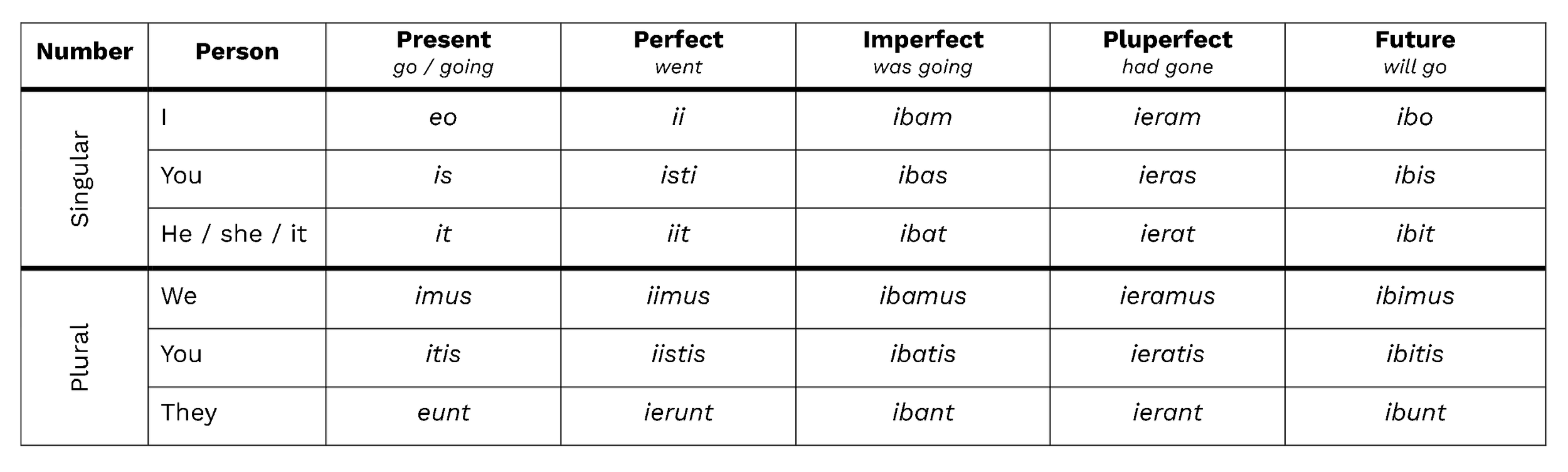
In Latin, the verbs ‘to be’ (esse) and ‘to go’ (ire) are very common but irregular in the way they change.
To be - esse
sum, esse, fui - to be
This is how the verb ‘to be’ will appear in a dictionary. As you can see, the three parts are very different from each other, and so can be hard to recognise as the same verb when translating.
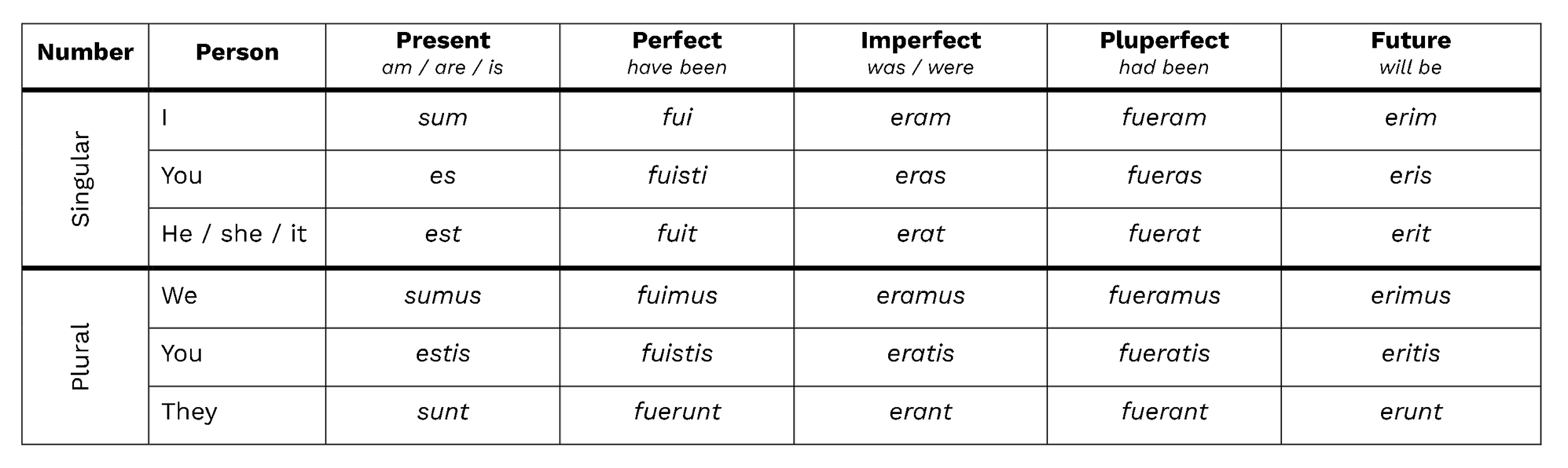
The perfect and pluperfect forms of the verb are fairly straightforward - the stem is fu- and the endings follow the usual pattern.
The present, imperfect, and future are a bit more complex but mostly start with e- (all except ‘I’, ‘we’, and ‘they’ in the present tense). Be careful of the imperfect tense, as it looks like the pluperfect endings, but it won’t have the stem of another word in front.
To go - ire
eo, ire, ii - to go
This is how the verb ‘to go’ will appear in a dictionary. Again, the parts are quite different, but other than eo (‘I go’), the pattern is quite easy to follow. In almost all cases, it is just an i- in front of the usual stem.