
Past tenses
There are 3 different types of past tense in Latin: perfect, imperfect, and pluperfect.
They all describe an action in the past, but in a slightly different way.
Perfect tense
The perfect tense is for past actions that have finished. For example, ‘I carried’.
These are the endings for a perfect tense verb:
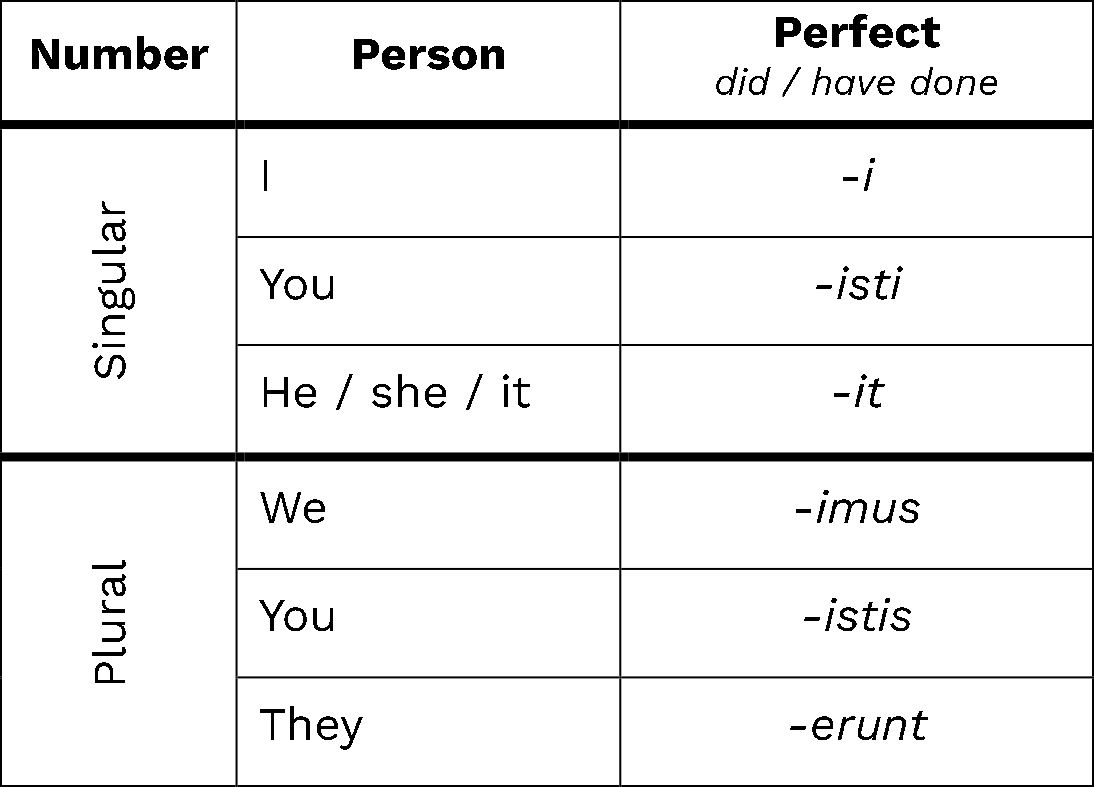
With the perfect tense, some words will add a ‘v’ between the word’s stem and the ending.
stem + v + ending
For example, porta- becomes portavi (‘I carried’).
Imperfect tense
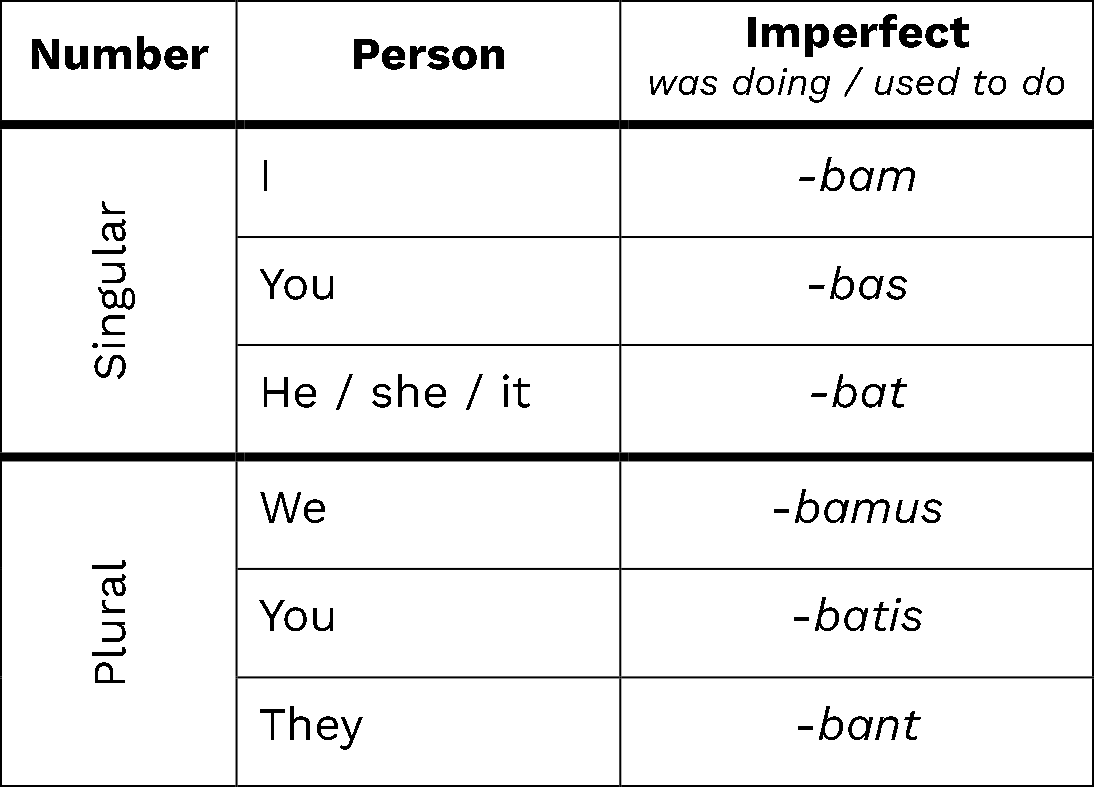
The imperfect tense is for past actions that didn’t finish or were ongoing. For example, ‘I was carrying’ or ‘I used to carry’.
The endings are very similar to present tense, but with -ba- between the stem of the word and the ending:
Pluperfect tense
The pluperfect tense is for past actions that someone ‘had’ done. For example, ‘I had carried’.
Once again, the endings are very similar to present tense, but with -era- between the stem of the word and the ending:
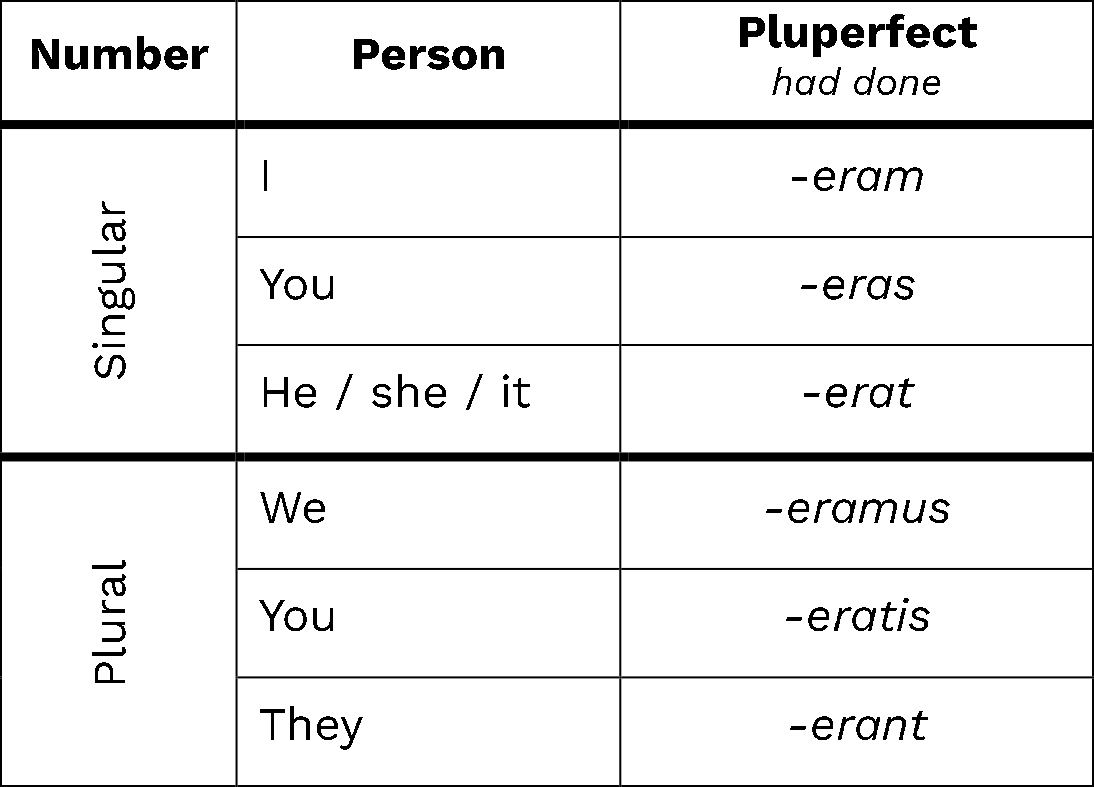
Like with the perfect tense, some pluperfect verbs will add a ‘v’ between the stem and the ending.
stem + v+ ending
For example, porta- becomes portaveram (‘I had carried’)